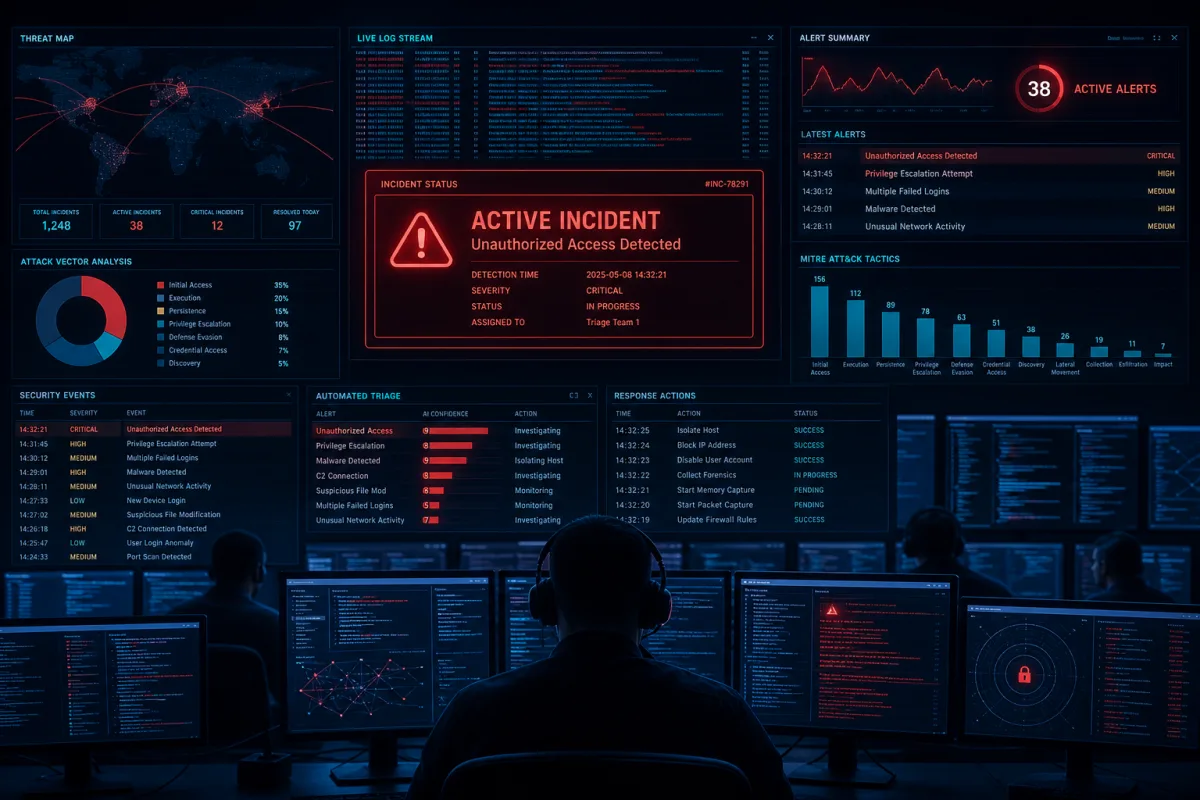
DFARS 252.204-7012 requires defense contractors to report cyber incidents to the DoD within 72 hours of discovery. That timeline is non-negotiable — missing it carries contracting consequences and potential loss of defense work. For prime contractors managing cloud-hosted defense systems, having a cloud subcontractor with pre-built incident response infrastructure is the difference between meeting the mandate and scrambling during an actual event.
What 72-Hour Reporting Actually Requires
DFARS 252.204-7012 specifies what must happen when a cyber incident occurs on systems handling Covered Defense Information (CDI) or CUI:
- Report within 72 hours to the DoD Cyber Crime Center (DC3) via the DIBNet portal
- Submit a malware sample to DC3 if malware was involved
- Preserve images of compromised systems for at least 90 days (DoD may request them)
- Allow access to DoD for review of your systems during and after the incident
- GuardDuty
UnauthorizedAccess:EC2/SSHBruteForce→ automatically deny the source IP in the WAF and security group - GuardDuty
Recon:EC2/PortProbeUnprotectedPort→ flag the instance, trigger vulnerability scan, create incident ticket - CloudTrail
ConsoleLoginFailure> 5 in 10 minutes → disable affected IAM user temporarily, notify SecOps - Detection: Automated alert fired, tier-1 analyst triages within 2 hours
- Incident declaration: If the alert represents a potential CDI/CUI system compromise, the incident is formally declared (timestamped in the ticketing system)
- Parallel tracks: Evidence preservation + report drafting begin simultaneously
- Hour 24: Internal incident assessment complete, preliminary report drafted
- Hour 48: Report reviewed by ISSO and legal/contracts team
- Hour 72: Report submitted to DIBNet portal
- Immediately restrict access to the affected storage resource
- Notify the government COR (Contracting Officer's Representative)
- Preserve the affected resource for DoD review
- Document the data that was exposed, to whom, and for how long
- Who notifies the prime? The sub must have a clear escalation path to the prime's ISSO and PM
- What is the notification timeline? Most primes want sub notification within 4-8 hours of incident declaration so they can coordinate the 72-hour reporting
- Who controls system access during an incident? Prime typically maintains override authority
- Who preserves evidence? Typically the sub (who controls the AWS environment) with copies provided to the prime
The clock starts at "discovery" — not when you fully understand the incident. This means detection infrastructure must be sensitive enough to identify incidents quickly, and your response process must be fast enough to report within 72 hours of that detection.
Most cloud-based defense contractors cannot meet these requirements with manual processes alone. Detection pipelines, automated triage, and pre-built reporting workflows are what make 72-hour compliance achievable.
Detection Infrastructure: The Foundation
You can't report an incident you haven't detected. The detection layer requires:
CloudWatch + Security Hub: AWS Security Hub aggregates findings from GuardDuty (threat detection), Config (compliance posture), Macie (S3 data exposure), and Inspector (vulnerability scanning) into a unified finding feed. Automated severity scoring filters noise. High-severity findings trigger immediate alerting.
CloudTrail and S3 Access Logging: Complete audit trail for all API activity in the AWS environment. For incident investigations, CloudTrail provides the "who did what when" record that DFARS reporting requires. Log retention of at least 90 days (beyond the DoD preservation requirement) is standard practice.
GuardDuty threat intelligence: GuardDuty correlates VPC flow logs, DNS queries, and CloudTrail events against AWS threat intelligence feeds and known-bad IP ranges. It generates findings for common attack patterns: port scans, C2 communications, credential exfiltration, crypto mining — without requiring custom rule maintenance.
SIEM integration (for cross-program visibility): Programs with multiple cloud environments benefit from centralizing Security Hub findings into a SIEM platform (Splunk GovCloud, Microsoft Sentinel Government, or similar) that provides cross-account correlation. See defense contractor incident response for the pre-built infrastructure stack.
Automated Triage: Speed Is the Requirement
When a potential incident occurs, the 72-hour clock is running. Manual triage — someone reviewing findings one at a time — doesn't scale. Automated triage rules:
Severity-based routing: Critical and High Security Hub findings trigger PagerDuty/Opsgenie alerting immediately (<5 minutes from detection to alert). Medium findings go to a queue for next-business-day review. Low findings are logged and reviewed in weekly SecOps cycles.
Playbook automation with AWS Lambda: Pre-built Lambda functions automate initial triage steps for common finding types:
Evidence collection automation: When an incident is escalated to confirmed status, automated evidence collection runs: CloudTrail export for the relevant time window, affected system snapshot, VPC flow log export, Security Hub finding export. Everything DC3 will ask for is assembled before the analyst finishes their initial review.
The 72-Hour Reporting Workflow
Translating technical detection into a DFARS-compliant report requires a documented process:
The key to meeting 72 hours is starting the reporting workflow immediately on incident declaration — not after the investigation is complete. DFARS 252.204-7012 does not require a complete investigation to report. It requires initial notification. You can supplement the report as investigation continues.
CUI Spillage and Data Exfiltration Incidents
One of the most common incident types on defense cloud systems is CUI spillage — CUI landing in a system or environment not authorized to hold it. AWS Macie detects sensitive data in S3 buckets that shouldn't contain it; CUI marking in documents can be detected through content-aware scanning.
For confirmed spillage incidents:
The CUI cloud engineering contractor post covers the full CUI handling architecture that minimizes spillage risk and supports rapid response when incidents occur.
Subcontractor Incident Response Responsibilities
When a cloud sub is operating infrastructure for a prime's program, the incident response responsibilities must be clearly defined in the subcontract:
These responsibilities should be documented in the subcontract or a program-specific incident response plan — not figured out during an actual event. See FAR DFARS flow-down IT subcontractor for the contractual basis for these obligations.
Frequently Asked Questions
Does a cloud subcontractor have the same 72-hour DFARS reporting obligation as a prime?
Yes. DFARS 252.204-7012 flows down to subcontractors at all tiers who handle CDI/CUI. A cloud sub operating infrastructure with CDI has the same 72-hour reporting obligation. Primes must ensure their subs are aware of and capable of meeting this requirement — and the sub must report both to DC3 and to the prime so the prime can coordinate.
What information must be included in a DFARS 72-hour incident report?
The DC3 reporting portal collects: company identification (CAGE code, contract number), description of the attack/intrusion, systems affected, CDI categories involved, actions taken so far, and point of contact. A malware sample must be submitted separately if malware was used. The report does not need to be complete — it needs to be timely.
What happens if we miss the 72-hour DFARS reporting deadline?
Late reporting is a contract compliance failure. Consequences range from contracting officer notification and cure notice to potential termination for cause on the affected contract. The DoD is also increasingly incorporating cyber incident reporting compliance into CPARS evaluations. Missing the deadline is not just a policy violation — it affects future work.
Can cloud infrastructure make incident response faster?
Yes, significantly. Cloud-native detection (GuardDuty, Security Hub), automated evidence collection (Lambda functions), and SIEM aggregation compress incident response timelines. Cloud environments also provide complete audit trails by default (CloudTrail, VPC Flow Logs) that physical data centers don't offer natively. A well-configured GovCloud environment makes 72-hour compliance achievable; an under-monitored environment makes it a scramble.
How does Rutagon support incident response as a cloud sub?
We build detection infrastructure, triage automation, and evidence collection pipelines as part of the cloud environment we deliver. Programs get GuardDuty, Security Hub, CloudTrail, and Macie configured and integrated — with automated alerting and evidence collection workflows — not as an add-on but as part of the baseline cloud environment. We also document the incident response process in the program SSP so the procedures are clear before an event occurs.
If your prime program's cloud environment needs incident response infrastructure that supports 72-hour DFARS compliance, contact Rutagon to discuss your requirements.