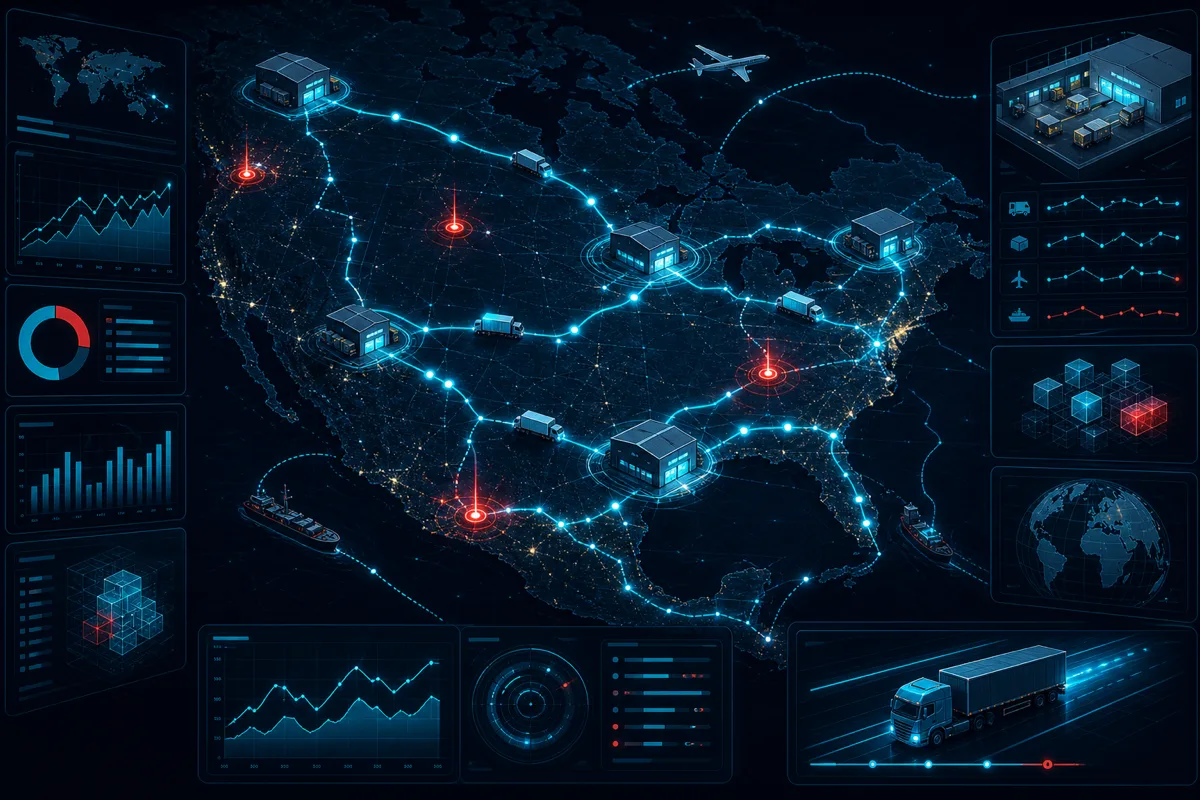
Generic logistics tracking software serves the median use case well. It fails the companies that have non-standard carrier relationships, complex multi-leg shipments, operations-specific exception handling requirements, or customer-facing tracking experiences that generic tools can't customize. Custom logistics tracking software solves the 20% of tracking complexity that generic tools handle poorly — which often represents 80% of your operational pain.
Where Generic Tracking Software Falls Short
Multi-carrier integration gaps: Most off-the-shelf tracking tools support the major carriers well (FedEx, UPS, USPS) but struggle with regional carriers, LTL freight, ocean freight, custom fleet tracking, or international carriers. Operations that span carrier types need unified tracking across all of them — which means custom integration.
Exception handling is generic: Generic tools tell you a package is delayed. They don't know that this particular shipment type (temperature-sensitive, high-value, or for a VIP customer) has a different SLA and should trigger different escalation actions. Custom logic matches exception handling to your business rules.
Customer notification is one-size-fits-all: Your customer experience requirements may require branded tracking pages, notification timing and content that matches your communication strategy, or delivery confirmation workflows that aren't available in generic tools.
No integration with your operational stack: Generic tracking tools are islands. Custom software integrates tracking status into your order management system, WMS, CRM, and customer support tools — allowing operations and support teams to work from a single view.
Reporting doesn't match your KPIs: Generic tools report what they measure, not what your business actually cares about. On-time delivery rate by carrier, by lane, by product category, by season — custom software reports on the KPIs your business uses to make carrier decisions.
Core Architecture of Custom Tracking Software
Carrier integration layer: The foundation of any tracking system. This layer normalizes tracking events from multiple carrier APIs into a unified event model:
from dataclasses import dataclass
from datetime import datetime
from enum import Enum
from typing import Optional

class TrackingEventType(str, Enum):
    PICKED_UP = "picked_up"
    IN_TRANSIT = "in_transit"
    OUT_FOR_DELIVERY = "out_for_delivery"
    DELIVERED = "delivered"
    EXCEPTION = "exception"
    ATTEMPTED_DELIVERY = "attempted_delivery"
    RETURNED = "returned"

@dataclass
class NormalizedTrackingEvent:
    carrier: str
    tracking_number: str
    event_type: TrackingEventType
    timestamp: datetime
    location: Optional[str]
    description: str
    raw_event: dict  # Original carrier event preserved for debugging

class FedExAdapter:
    """Converts FedEx tracking events to normalized format."""

    FEDEX_STATUS_MAP = {
        "PU": TrackingEventType.PICKED_UP,
        "IT": TrackingEventType.IN_TRANSIT,
        "OD": TrackingEventType.OUT_FOR_DELIVERY,
        "DL": TrackingEventType.DELIVERED,
        "DE": TrackingEventType.EXCEPTION,
        "AO": TrackingEventType.ATTEMPTED_DELIVERY,
    }

    def normalize_event(self, fedex_event: dict) -> NormalizedTrackingEvent:
        event_type = self.FEDEX_STATUS_MAP.get(
            fedex_event["EventType"],
            TrackingEventType.IN_TRANSIT
        )
        return NormalizedTrackingEvent(
            carrier="fedex",
            tracking_number=fedex_event["TrackingNumber"],
            event_type=event_type,
            timestamp=datetime.fromisoformat(fedex_event["Timestamp"]),
            location=fedex_event.get("City"),
            description=fedex_event.get("EventDescription", ""),
            raw_event=fedex_event,
        )
Exception detection and routing: The intelligence layer that determines when a shipment needs attention:
from dataclasses import dataclass
from typing import Callable

@dataclass
class ExceptionRule:
    name: str
    condition: Callable[[ShipmentContext], bool]
    severity: str  # low, medium, high, critical
    action: Callable[[ShipmentContext], None]

EXCEPTION_RULES = [
    ExceptionRule(
        name="high_value_delayed",
        condition=lambda ctx: ctx.shipment.value > 10000 and ctx.is_delayed_by_hours(24),
        severity="high",
        action=lambda ctx: notify_account_manager(ctx.shipment),
    ),
    ExceptionRule(
        name="temperature_sensitive_exception",
        condition=lambda ctx: ctx.shipment.requires_cold_chain and ctx.latest_event.event_type == TrackingEventType.EXCEPTION,
        severity="critical",
        action=lambda ctx: escalate_to_operations_immediately(ctx.shipment),
    ),
    ExceptionRule(
        name="second_delivery_attempt",
        condition=lambda ctx: ctx.attempted_delivery_count >= 2,
        severity="medium",
        action=lambda ctx: notify_recipient_with_redirect_options(ctx.shipment),
    ),
]
Customer-facing tracking interface: The last-mile experience for your customers. This can be as simple as a status page with your branding, or as complex as a real-time map view with delivery window estimates. Customization allows matching your brand experience and providing the specific information your customers actually care about.
Operational dashboard: The internal tool your operations team uses for exception management, carrier performance monitoring, and SLA tracking. Generic tools often provide insufficient filtering, export, and integration options for operational teams.
Carrier Integration Approaches
Polling-based (pull): Your system periodically queries carrier APIs for updated tracking status. Simple to implement, always available, but introduces latency (you learn about events after the polling interval). Typical polling interval: 15-30 minutes.
Webhook-based (push): Carriers push tracking events to your endpoint when they occur. Lower latency (events arrive within seconds of occurrence), but requires a publicly accessible endpoint and carrier-specific webhook setup. FedEx, UPS, and most major carriers support webhooks.
Hybrid: Use webhooks for carriers that support them, polling as fallback and for carriers without webhook support. Most production systems use hybrid approaches.
# FastAPI webhook receiver for carrier push events
from fastapi import FastAPI, Request, HTTPException
from fastapi.security import HTTPBearer

app = FastAPI()

@app.post("/webhooks/fedex")
async def fedex_webhook(request: Request):
    # Verify webhook signature
    signature = request.headers.get("X-FedEx-Signature")
    body = await request.body()

    if not verify_fedex_signature(body, signature, FEDEX_WEBHOOK_SECRET):
        raise HTTPException(status_code=401, detail="Invalid signature")

    payload = await request.json()

    for event in payload.get("TrackingEvents", []):
        normalized = FedExAdapter().normalize_event(event)
        await process_tracking_event(normalized)

    return {"status": "accepted"}
Expected Outcomes from Custom Tracking Software
Teams that implement custom logistics tracking software typically see: - Reduction in inbound customer "where is my order?" contacts (carrier tracking transparency reduces these) - Faster exception response time (automated exception detection vs. manual monitoring) - Better carrier selection decisions (carrier-level on-time performance reporting by lane and season) - Operational team efficiency gains (single unified tracking view vs. multiple carrier portals)
Rutagon Builds Custom Logistics Software
If your generic tracking tool is creating operational blind spots or customer experience gaps, Rutagon designs and builds the custom tracking infrastructure. Contact us at rutagon.com/contact.
See also: custom software capabilities at Rutagon and AI workflow automation.
FAQ
How long does custom logistics tracking software take to build?
An MVP covering your primary carriers, normalized event model, exception detection, and internal dashboard: 8-14 weeks. Production-quality with full carrier coverage, customer-facing tracking portal, reporting, and integration with your OMS/WMS: 4-6 months. The timeline is primarily driven by carrier integration complexity (each carrier API is different) and the scope of the internal tools and customer-facing components.
Is custom tracking software worth it vs. improving configuration of existing tools?
Worth evaluating first: most generic tools have configuration options that teams don't fully use. If the core limitations are carrier coverage gaps or integration gaps with your specific tech stack, custom is likely justified. If the limitations are primarily in reporting, notification configuration, or branding, push on your existing vendor first.
How do you handle tracking for international shipments with multiple carriers?
International multi-leg shipments (domestic → international freight → local last-mile carrier) require tracking handoffs between carrier systems. The custom integration layer maps shipments to tracking numbers for each leg and aggregates the events into a unified timeline. The complexity is real — international multi-carrier tracking is one of the strongest cases for custom software vs. generic tools.
Can you integrate custom tracking with our existing ERP?
Yes — this is one of the primary motivations for custom tracking software. Standard ERP systems (SAP, Oracle, NetSuite) have APIs for order status updates. Custom tracking software updates shipment status in the ERP as tracking events arrive, maintaining a single source of truth for order status. The integration approach depends on your ERP's API capabilities and data model.
What happens when a carrier's API changes?
Carrier API changes are a maintenance reality for any tracking system. Custom software handles this through the adapter pattern — changes to a carrier's API affect only that carrier's adapter, not the rest of the system. Maintaining a test suite with sample carrier responses (fixed fixtures) allows quick detection of API breaking changes. Most major carriers provide advance notice of API changes; subscribe to their developer mailing lists.