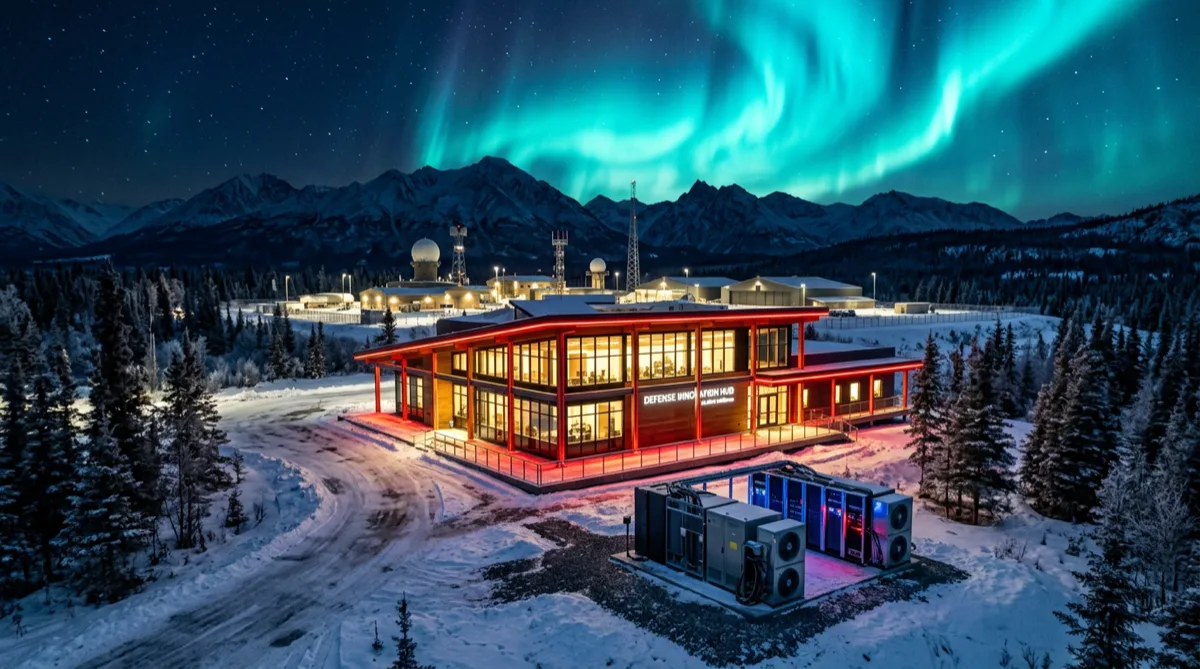
HUBZone (Historically Underutilized Business Zone) certification is one of the most powerful competitive differentiators available to small technology companies pursuing federal defense contracts. The combination of set-aside eligibility, price evaluation preferences on full-and-open competitions, and the geographic uniqueness of Alaska-based operations creates a distinct competitive position that a majority of defense IT firms simply cannot replicate.
This covers what HUBZone certification means for a cloud engineering and DevSecOps company, how Alaska's HUBZone designations work, and the strategic positioning this creates for programs where Alaska's presence matters.
What HUBZone Certification Provides
The SBA's HUBZone program was created to direct federal contracting spending toward economically distressed communities. For technology companies certified under the program, three key competitive mechanisms apply:
Set-aside eligibility: Federal agencies can set aside contracts specifically for HUBZone small businesses (HUBZone-only competitions). Any SBA-certified HUBZone small business can compete in these set-asides, and the field is dramatically smaller than full-and-open or even standard small business set-asides.
Price evaluation preference on open competitions: When a HUBZone company bids against non-HUBZone companies on full-and-open contracts, the CO applies a 10% price evaluation preference to the HUBZone bidder — the government evaluates the HUBZone bidder as if their price were 10% lower than submitted. This means a HUBZone company can submit a bid up to 10% higher than a non-HUBZone competitor and still win on evaluated price.
Participation goals: Agencies have governmentwide goals for 3% of prime contract dollars to go to HUBZone small businesses. This creates positive incentives for program offices to use HUBZone set-asides and to select HUBZone subcontractors on prime-held IDIQs.
Alaska HUBZone Designations
Alaska has extensive HUBZone coverage — much of the state qualifies due to its geographic remoteness, lower population density, and specific economic conditions recognized by the SBA's designation criteria.
Indian Land designation: Many Alaska Native village areas hold permanent Indian Land HUBZone designation. Rutagon's principal office address in Wasilla, Alaska sits within a designated Indian Land HUBZone area — a permanent designation that doesn't depend on periodic renewal the way Qualified Census Tract (QCT) and Qualified Non-Metropolitan County designations do.
Permanent vs. temporary designations: Indian Land HUBZone designations are permanent by statute — they don't expire or require periodic re-certification from a census update. This provides regulatory stability for business planning that QCT-based HUBZone designations don't offer.
SBA HUBZone map verification: The SBA's HUBZone map (hubzoneprogram.sba.gov) is the authoritative source for address eligibility. Specific parcels are eligible or ineligible; neighboring addresses may differ. Confirmation against the SBA map before certification application is essential.
How HUBZone Certification Works
Certification is through the SBA's certify.sba.gov portal (the same portal used for 8(a) and WOSB). Requirements:
- Principal office must be in a HUBZone area
- At least 35% of employees must reside in a HUBZone
- Business must be a small business under NAICS size standards
The 35% employee residency requirement is the most operationally challenging aspect for technology companies. For a company with employees in multiple states, maintaining 35% HUBZone employee residency requires tracking employee home addresses and managing hiring to maintain compliance.
For a small technology company with a handful of employees, where the owner/principal is the primary employee and works from a HUBZone address, meeting the 35% threshold is straightforward.
SBA exam and site visit: Larger companies may face SBA examination or site visit to verify compliance. Documentation requirements include lease agreements, employee records, payroll records, and evidence of operations at the HUBZone address.
Three-year recertification: HUBZone certification requires recertification every three years. Ongoing compliance with the employee residency requirement must be maintained throughout the certification period.
Alaska Geographic Positioning in Defense Programs
Beyond the certification's contractual mechanics, an Alaska-based technology company brings geographic positioning relevant to specific defense program categories:
Alaska-based installations: JBER, Eielson AFB, Fort Wainwright, Clear SFS, and multiple radar and sensor sites in Alaska generate IT modernization, cloud infrastructure, and software requirements. Proximity to these installations creates natural points of engagement — local small businesses familiar with the Arctic environment and Alaska-specific logistics.
NORTHCOM and Pacific Command: Alaska's position at the intersection of NORTHCOM and Indo-Pacific Command jurisdictions makes Alaska-based defense technology companies uniquely positioned for programs in both theaters.
Arctic domain awareness: Growing DoD investment in Arctic domain awareness, sensor integration, and persistent surveillance creates demand for technology companies with demonstrated ability to deliver software for Arctic conditions. An Alaska-based operation demonstrates lived experience with the operational environment, not just technical capability in isolation.
HUBZone as a Teaming Differentiator
On prime proposals for contracts with SBA subcontracting goals, a HUBZone certified sub brings double value:
- Technical delivery: Cloud engineering, DevSecOps, ATO support
- SBA goal contribution: Each dollar subcontracted to Rutagon counts toward the prime's HUBZone subcontracting goal (if pursuing HUBZone goal credit) and the broader small business subcontracting goal
For primes building their SB subcontracting plan, a HUBZone certified sub is more valuable than a non-certified small business for the same technical work — the prime gets both the capability and the goal progress in one engagement.
Rutagon is pursuing HUBZone certification (pending 8(a) application outcome — SBA portal allows one active application at a time). When certified, Rutagon's Wasilla, AK HUBZone-designated address and Alaska-based operations create a positioning combination that most cloud engineering firms simply don't have: Tier 1 cloud capability, DevSecOps experience, and HUBZone + 8(a) set-aside eligibility from the strategic tip of the North American continent.
Prime contractors and program offices interested in Rutagon's cloud engineering and DevSecOps capabilities can reach out at contact@rutagon.com.
Related: 8(a) Program for Alaska Defense Tech Companies | SBA Subcontracting Goals: Prime Contractor Guide | Alaska ANC Subcontracting IT Partner
Frequently Asked Questions
What is the 10% HUBZone price evaluation preference?
On full-and-open federal competitions, contracting officers apply a 10% price evaluation adjustment when comparing a HUBZone small business's price against non-HUBZone competitors. The government evaluates the HUBZone bidder as if their price is 10% lower than submitted. This allows HUBZone companies to bid slightly higher than non-certified competitors while still winning on evaluated price.
Does Alaska qualify as a HUBZone area?
Many parts of Alaska qualify as HUBZone areas, including Indian Land designations that cover significant portions of the state. Some areas hold permanent Indian Land designation; others qualify under Qualified Non-Metropolitan County status. The SBA's HUBZone map at hubzoneprogram.sba.gov is the authoritative source for specific address eligibility.
Can a technology company working remotely qualify for HUBZone?
HUBZone certification requires the principal office to be in a HUBZone area, but employees can work remotely — they must simply reside in a HUBZone area (35% residency requirement). For small technology companies where the primary personnel are the owner and a few direct hires, maintaining the residency requirement at the principal office address is achievable. The SBA evaluates each case based on documented employee addresses.
What is the difference between HUBZone and 8(a) for defense contracting?
HUBZone is a geographic designation based on the company's principal office location and employee residency. 8(a) is a business development program for socially and economically disadvantaged business owners. Both provide set-aside eligibility. They can be held simultaneously — a company can be both 8(a) certified and HUBZone certified, which provides access to the widest range of set-aside and sole-source contracting mechanisms.
How does a HUBZone small business apply for certification?
HUBZone certification is applied for through the SBA's certify.sba.gov portal. The application requires documentation of: principal office address in a HUBZone area (lease, utility bills), employee residency in HUBZone areas (home addresses, tax records), small business size certification, and ownership documentation. SBA reviews applications within 90 days. The portal is the same used for 8(a) applications.