Two systems of record that should agree with each other — an internal ledger and a payment processor, an inventory system and a warehouse management system, a CRM and a billing platform — drift apart constantly in real operations. Manual reconciliation (someone in finance or operations spending days each month comparing spreadsheets) doesn't scale and doesn't catch discrepancies quickly enough to prevent them from compounding. Here's what we built for a client whose manual reconciliation process had become an unsustainable monthly burden.
Why Systems Drift Apart in the First Place
Discrepancies between systems of record accumulate from many sources: timing differences (a transaction recorded in one system before it syncs to another), integration failures that silently drop records, manual data entry errors in systems without full API integration, currency conversion or rounding differences, and genuine business logic differences between how two systems categorize or calculate the same underlying event. No integration is perfect, which is exactly why reconciliation as an ongoing process — not a one-time fix — matters.
Core Architecture
Data ingestion from both systems of record. Pull data from each source system on a regular schedule (often daily, sometimes more frequently for high-volume operations), normalizing into a common comparable format despite each system's different native data structure.
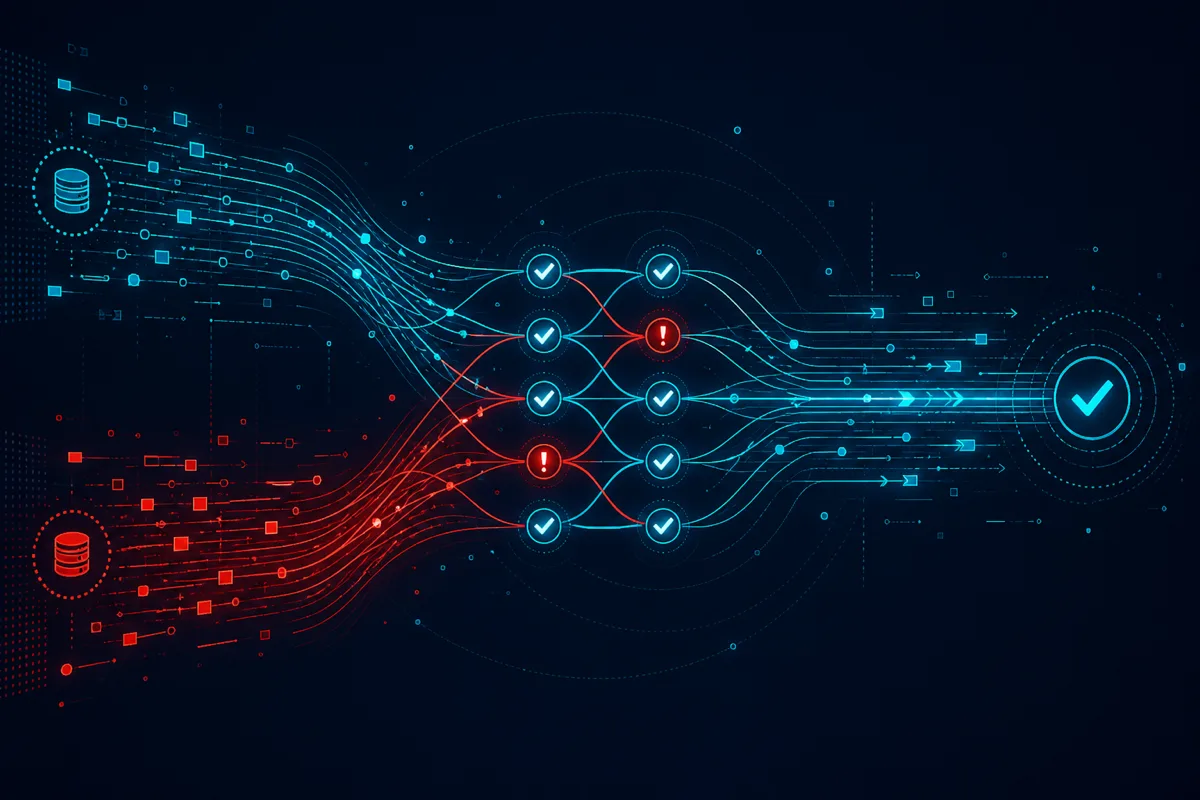
Matching engine with tiered matching logic. Exact matches (matching identifiers, matching amounts, matching dates) resolve automatically with high confidence. Fuzzy matching handles near-matches that likely represent the same underlying event with minor discrepancies (a timing difference of a day, a small rounding difference) — these get flagged with a specific discrepancy type and confidence level rather than either auto-resolving silently or requiring identical full manual review as a true anomaly.
Discrepancy classification and routing. Not all discrepancies are equal. Timing differences that will naturally resolve within a day or two need different handling than genuine data integrity issues — a payment recorded in one system with no corresponding record in the other, which might indicate an actual error requiring investigation, or in the worst case a sign of a processing failure or potential fraud.
Audit trail and resolution tracking. Every discrepancy, once identified, needs a full record of when it was found, its classification, who (or what automated process) resolved it, and how — both for internal accountability and, in financial contexts, for compliance and audit requirements that regulators or auditors may specifically request.
Dashboard and alerting for the operations team. Real-time visibility into reconciliation status — how many records matched automatically, how many are pending review, how many represent genuine unresolved discrepancies — replaces the previous end-of-month scramble to manually compare exports with continuous, always-current visibility.
Handling the Hard Reconciliation Cases
Many-to-one and one-to-many matches. Real data doesn't always match one record to exactly one corresponding record — a single payment might correspond to multiple invoices, or a single shipment might correspond to multiple orders. Build matching logic that explicitly handles these relationship types rather than assuming every reconciliation problem is a simple one-to-one comparison.
Partial matches requiring business judgment. Some discrepancies genuinely need a human decision — is this small variance within acceptable tolerance, or does it indicate a real problem? Define explicit tolerance thresholds (a dollar amount or percentage variance considered auto-acceptable) based on the specific business context, rather than either flagging every tiny variance for manual review (creating review fatigue) or ignoring small variances that might indicate a systematic, compounding issue.
Historical reconciliation for previously unreconciled data. When implementing new reconciliation automation, there's often a backlog of historical discrepancies that were never properly resolved under the old manual process. Plan for a dedicated historical cleanup effort separate from the ongoing automated reconciliation, since the volume and nature of historical issues often differs significantly from ongoing operational discrepancies.
Building Trust in Automated Reconciliation
Finance and operations teams who've relied on manual reconciliation (however painful) often have justified skepticism about trusting an automated system with financial accuracy. Building this trust requires:
Transparent matching logic, not a black box. Show exactly why two records were matched or flagged as discrepant, so the team can verify the logic makes sense rather than blindly trusting an opaque system.
A validation period running automated and manual reconciliation in parallel before fully retiring the manual process, comparing results to confirm the automated system catches everything the manual process caught (and ideally more).
Conservative auto-resolution thresholds initially, tightening automation scope over time as trust and track record build, rather than immediately automating resolution for every discrepancy type from day one.
Results
Since deployment, the client's reconciliation process moved from a multi-day monthly manual effort to continuous, near-real-time visibility, with genuine discrepancies surfaced within a day rather than discovered weeks later during a month-end close process. This earlier detection meaningfully reduced the compounding effect of unresolved discrepancies, since issues were caught and addressed before additional transactions built on top of an already-inconsistent baseline.
Rutagon builds custom data reconciliation systems for businesses managing multiple systems of record that need to stay in sync. Contact us to discuss a reconciliation automation project for your operation.
Frequently Asked Questions
Why do systems of record drift apart even with API integrations in place?
Drift happens from timing differences during sync, integration failures that silently drop records, manual data entry in systems without full integration, currency or rounding differences, and genuine business logic differences in how each system categorizes the same event. No integration is perfect, which is why ongoing reconciliation matters even with automated data flows.
How do you decide which discrepancies need human review versus automatic resolution?
Define explicit tolerance thresholds based on your specific business context — a dollar amount or percentage variance considered acceptable for auto-resolution — while routing genuine anomalies (like a payment with no corresponding record in the other system) to human review with full context provided.
Can reconciliation software handle many-to-one or one-to-many matches?
Yes, and it needs to for real-world data. Matching logic should explicitly handle these relationship types (a single payment corresponding to multiple invoices, for example) rather than assuming every reconciliation scenario is a simple one-to-one comparison.
How do you build trust in an automated reconciliation system after years of manual process?
Transparent matching logic that shows why records were matched or flagged, a validation period running automated and manual reconciliation in parallel before fully retiring manual work, and conservative initial auto-resolution thresholds that tighten over time as trust builds.
What happens to historical unreconciled discrepancies when implementing new reconciliation automation?
Plan for a dedicated historical cleanup effort separate from your ongoing automated process, since the volume and nature of historical backlog issues often differs significantly from the discrepancies your new system will catch going forward.