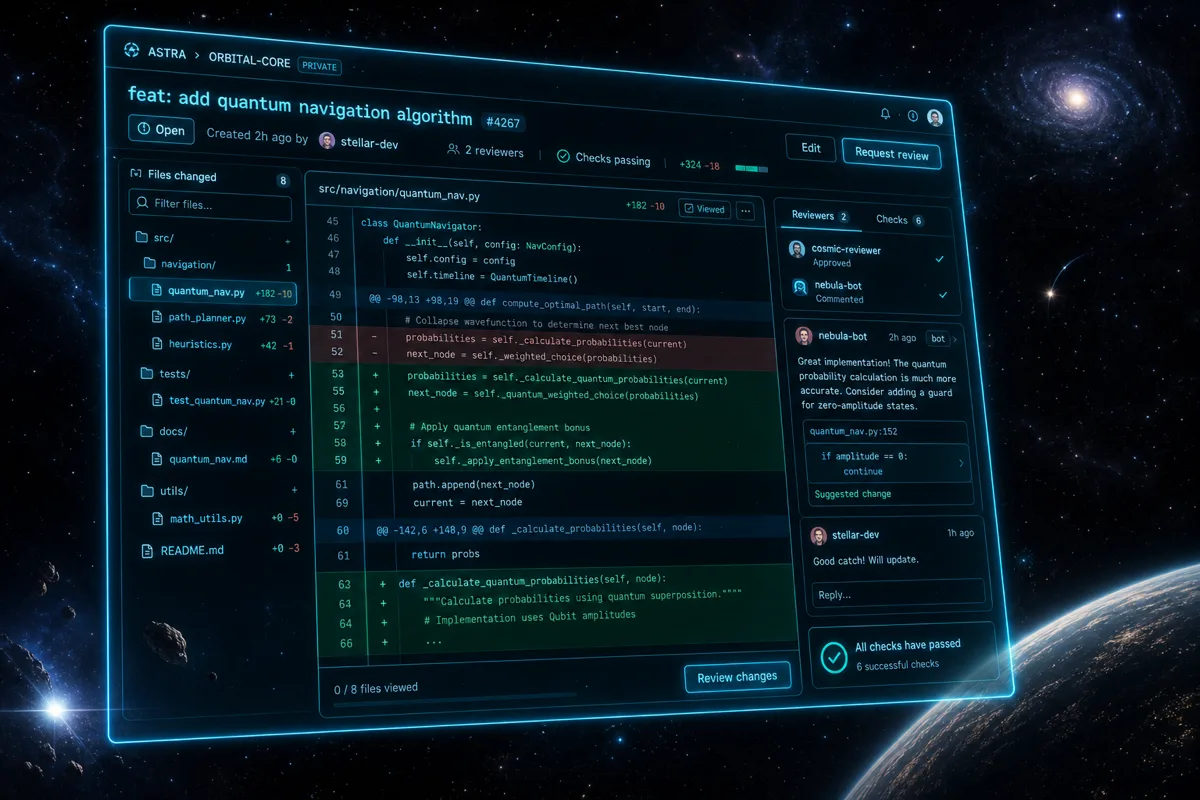
Engineering teams adopting AI-assisted code review tools often hit the same problem within a few weeks: the tool generates so many low-value comments that engineers start ignoring it entirely, defeating the purpose. Here's how we scope these implementations to catch real issues without becoming noise.
The Core Tension: Coverage vs. Signal
An AI review tool configured to flag everything possible — style nitpicks, theoretical edge cases, minor naming suggestions — generates high recall but terrible precision from the engineering team's perspective. Every additional low-value comment trains reviewers to skim past all comments, including the genuinely important ones. We optimize for precision first, expanding coverage only as the team's trust in the tool's judgment grows.
What We Automate First
Security and Correctness Issues
SQL injection risks, unsanitized user input, authentication bypass patterns, and resource leaks are high-value, low-noise flags — these are the kind of issues an AI reviewer should surface aggressively, since false positives here are cheap to dismiss and false negatives are expensive.
Test Coverage Gaps
Flagging pull requests that modify business logic without corresponding test changes catches a common and costly gap, especially useful for less experienced engineers still building the habit of writing tests alongside feature code.
Consistency With Established Patterns
When a codebase has an established pattern for a particular kind of operation (e.g., how errors are logged, how API responses are structured), an AI reviewer trained on the existing codebase can flag new code that deviates from that pattern — catching drift before it becomes inconsistent conventions scattered throughout the codebase.
What We Deliberately Don't Automate
Architectural Judgment Calls
Whether a new service boundary makes sense, whether a particular abstraction is premature or overdue — these require context about team dynamics, business roadmap, and tradeoffs that an AI reviewer commenting on a diff doesn't have visibility into. We keep these as human review responsibilities.
Subjective Style Preferences
Anything a linter or formatter can enforce automatically (indentation, import ordering, naming conventions) should be enforced by that tooling, not raised as a conversational comment by an AI reviewer competing for the human reviewer's attention.
Implementation Approach
# Example CI integration point
on:
  pull_request:
    types: [opened, synchronize]

jobs:
  ai-review:
    steps:
      - name: Run scoped AI review
        run: |
          ai-reviewer --config .ai-review-config.yaml \
            --focus security,test-coverage,pattern-consistency \
            --diff ${{ github.event.pull_request.diff_url }}
We start with a narrow configuration focused on the highest-value categories, then expand based on the team's actual feedback about which flagged issues were genuinely useful versus noise — treating the tool's configuration as something that gets tuned over weeks, not set once and left alone.
Measuring Whether It's Working
The metric that matters isn't "number of issues flagged" — it's the ratio of flagged issues the team actually acts on versus dismisses, tracked over time. A tool with a low action-to-dismiss ratio needs its configuration narrowed, regardless of how comprehensive its flagging capability is in principle.
Human Review Still Required
AI-assisted review augments human code review; it doesn't replace the human reviewer's judgment on whether a change is architecturally sound, whether it serves the actual product requirement, and whether the team should merge it. We're explicit about this boundary with every team we help implement these tools — the goal is catching mechanical issues faster, not removing human judgment from the merge decision.
Results
For an engineering team that had previously tried and abandoned an AI code review tool due to noise complaints, a narrowly scoped reimplementation focused on security, test coverage, and pattern consistency saw sustained adoption, with engineers reporting the flagged issues as consistently useful rather than something to click through and ignore.
Want to implement AI-assisted code review that your engineers will actually trust? Talk to us about your process — 907-841-8407 or contact@rutagon.com.
Frequently Asked Questions
Why do AI code review tools often get abandoned by engineering teams?
The most common cause is excessive noise — tools configured to flag everything possible generate low-value comments that train reviewers to ignore all AI feedback, including genuinely important flags. Narrow, high-precision configuration prevents this.
What kinds of issues are best suited for AI-assisted code review?
Security and correctness issues (injection risks, unsanitized input, resource leaks), test coverage gaps on business logic changes, and consistency with established codebase patterns tend to be high-value, low-noise categories to automate first.
Should AI code review replace human reviewers?
No. AI-assisted review should augment human review by catching mechanical issues faster, not replace human judgment on architectural soundness, business requirement fit, or the merge decision itself.
How do you measure whether an AI code review tool is actually helping?
Track the ratio of flagged issues the team acts on versus dismisses over time, rather than the raw number of issues flagged. A low action-to-dismiss ratio signals the configuration needs narrowing.
Can AI code review tools learn a specific codebase's established patterns?
Yes, when configured to reference the existing codebase's conventions, an AI reviewer can flag new code that deviates from established patterns for things like error handling or API response structure, helping catch inconsistency before it spreads.